Category: Articles

  • The ROI of Compliance: How RegTech and SupTech Modernization Drives Enterprise Cost-Reduction

    The ROI of Compliance: How RegTech and SupTech Modernization Drives Enterprise Cost-Reduction

    1. Executive Summary

    Compliance costs in MEA emerging markets are rising faster than the balance sheets they protect. Central banks in Egypt, Rwanda, and Tanzania are expanding their demands for granular data on capital, liquidity, AML, and payment-system resilience. At the same time, instant payments and mobile money have multiplied transaction volumes.

    Institutions and supervisors have mostly absorbed this by adding people. Under that model, cost grows in line with regulatory scope. This analysis demonstrates that RegTech and SupTech modernization breaks that link. When compliance is built as data infrastructure rather than as a labour function, it becomes a measurable source of operational savings for both the regulated and the regulator.

    2. Demystifying the Ecosystem

    RegTech is the technology regulated entities use to meet their obligations: banks, payment service providers, microfinance institutions, and fintechs. It covers automated regulatory reporting, AML transaction monitoring, e-KYC, sanctions screening, and regulatory change management. It runs on the institution’s own data.

    SupTech is the technology central banks, regulators, and financial intelligence units use to collect, validate, and analyse supervisory data. It covers automated data collection, supervisory data warehouses, risk dashboards, and early-warning analytics. It runs on data aggregated across the whole supervised population.

    The two meet at the public-private interface, where most of the system’s compliance cost sits. In the legacy model, that interface is a document exchange: a template is published, filled manually, signed off, and re-checked by hand. In a modern model, it is a data contract. That contract is a shared data dictionary, machine-readable validation rules, and a secure API channel. The National Bank of Rwanda’s move from submitted templates to automated data pulls shows this model is achievable in an emerging-market setting.

    3. The Cost and Efficiency Vectors

    3.1 Automated, granular data ingestion and reporting

    In legacy reporting, most effort goes to extraction, spreadsheet transformation, and reconciliation. None of these steps adds analytical value.

    An illustrative model shows the scale. A mid-tier bank filing 60 recurring returns at 30 person-hours each spends about 21,600 hours a year on report production. That is more than ten full-time staff. A RegTech layer built on one canonical data model can automate 60–70% of that effort, releasing six to eight FTEs. When a new return is introduced, the bank adds a mapping, not a manual process.

    Granular, contract-level data also lets regulators derive new aggregates themselves. This cuts ad-hoc data requests, one of the most disruptive and least budgeted compliance costs.

    3.2 Fewer errors, fewer fines, fewer bottlenecks

    Manual reporting fails predictably: transposition errors, inconsistent classifications, stale rates, and reconciliation breaks closed under deadline pressure. RegTech reduces this exposure in three ways:

    • Validation at source: regulator rules run before submission, so breaks are fixed while they are cheap.
    • Data lineage: every figure traces to source records, which shortens audits and inspections.
    • Deterministic controls: screening and monitoring apply the same rules every time.

    AML shows the largest gap. Rules-based monitoring is widely reported to produce false-positive rates above 90%. Risk-scored triage redirects analyst time to genuine risk, a critical gain where qualified analysts are scarce.

    3.3 From reactive audit to predictive detection

    Traditional supervision looks backward, and findings often arrive months after the behaviour. With high-frequency data, institutions monitor liquidity, exposures, and AML typologies continuously, catching issues before they become breaches. Supervisors apply peer-group outlier detection and network analysis to target examinations by measured risk rather than by calendar. Early correction costs far less than remediation.

    4. The Interoperability Advantage

    RegTech and SupTech built separately save money on each side. Built to a shared architecture, they save money across the whole system. Without a common interface, every institution builds bespoke adapters to changing requirements, and the regulator absorbs inconsistent submissions.

    A unified data bridge rests on four principles:

    1. Shared data dictionary: one versioned model of definitions and validation rules, built on XBRL, SDMX, and ISO 20022. ISO 20022 alignment lets payment and reporting data share one semantic layer.
    2. Open, secure APIs: push and pull exchange replaces file uploads, secured with mutual TLS and OAuth. Validation feedback becomes immediate, cutting resubmission cycles from days to minutes.
    3. Microservices engines: ingestion, validation, analytics, and case management deploy independently. A new requirement means a new service and one mapping update, not a rebuilt pipeline.
    4. "Report once, use many": the central bank, FIU, and statistics function draw on one governed submission instead of separate requests.

    Institutions gain lower integration costs and faster adoption of new rules. Supervisors gain cleaner data at intake and analytical capacity that grows without matching headcount. The system gains credibility, which has direct value in correspondent banking and FATF evaluations.

    Strategic Implications

    Financial institutions and regulators must treat compliance modernization as infrastructure investment with a quantifiable return. That return comes from released labour, lower penalty exposure, and cheaper adoption of each new rule. It is maximized when RegTech and SupTech are designed against one data contract rather than procured separately.

    Entrant DPS operates at this interface, helping central banks across Egypt, Rwanda, Tanzania, and wider Africa design SupTech data architectures, and helping institutions build RegTech that connects to them cleanly. The objective is compliance infrastructure that costs less to run each year.


  • ISO 27001: Essential Guide to Security Certifications

    ISO 27001: Essential Guide to Security Certifications

    Navigating the Information Security Landscape: A Guide to ISO 27001, 27017, and 27018

    ISO27001 is the cornerstone of an organization’s information security management system (ISMS). In an era defined by digital transformation and escalating cyber threats, the need for a structured, internationally recognized framework to protect sensitive information has never been more critical. While many business leaders have heard of ISO standards, the specific value and distinctions between certifications like ISO 27001, ISO 27017, and ISO 27018 can be unclear. This article will demystify these pivotal certifications, explaining their unique focuses and the tangible value they bring to organizations navigating the complexities of modern data security.

    The Foundation: Understanding ISO 27001

    Before diving into the cloud-specific standards, it’s essential to grasp the bedrock upon which they are built.

    What is ISO 27001?
    ISO 27001 is the international standard that provides the framework for establishing, implementing, maintaining, and continually improving an Information Security Management System (ISMS). An ISMS is a systematic approach to managing sensitive company information so that it remains secure. It encompasses people, processes, and IT systems, applying a risk management process to ensure comprehensive protection.

    The Value of ISO 27001 Certification
    Achieving ISO 27001 certification is not merely about ticking boxes; it delivers profound business value. It demonstrates to clients, partners, and regulators that you take information security seriously, significantly enhancing your organization’s credibility and competitive edge. It helps you comply with increasing legal and contractual data protection requirements, such as GDPR, and reduces the risk of costly data breaches. Furthermore, by systematically identifying and mitigating risks, it fosters a culture of security within the organization, leading to improved operational efficiency and resilience.

    Securing the Cloud: The Role of ISO 27017

    As businesses migrate to the cloud, the security dynamics change. ISO 27017 was developed to address this new frontier.

    What is ISO 27017?
    ISO 27017 provides code of practice for information security controls based on ISO 27002, offering specific guidance for cloud services. It is designed for both cloud service providers (CSPs) and cloud service customers (CSCs). This standard addresses the shared responsibility model of cloud computing, clarifying which security controls are the responsibility of the provider and which fall to the customer.

    The Value of ISO 27017 Certification
    For a cloud service provider, certification under ISO 27017 is a powerful market differentiator. It signals to potential customers that the provider’s security practices are robust, internationally recognized, and specifically tailored to the unique challenges of the cloud environment. For customers, using an ISO 27017-certified provider offers greater assurance and a clearer understanding of their own security responsibilities. This shared clarity reduces ambiguities, mitigates risks associated with cloud adoption, and simplifies the due diligence process during procurement.

    Protecting Privacy in the Cloud: A Deep Dive into ISO 27018

    While ISO 27017 covers general cloud security, ISO 27018 focuses on a particularly sensitive aspect: the protection of personal data.

    What is ISO 27018?
    ISO 27018 is the first international standard focused on protecting personally identifiable information (PII) in public clouds. It establishes commonly accepted control objectives, controls, and guidelines for implementing measures to protect PI. Essentially, it builds upon the principles of ISO 27002 and provides specific guidance for acting as a PII processor in a cloud computing environment.

    The Value of ISO 27018 Certification
    In a world increasingly concerned with data privacy, ISO 27018 certification is a testament to an organization’s commitment to protecting user data. For cloud providers, it demonstrates compliance with strict privacy principles, assuring customers that their PII will not be used for unauthorized purposes, such as advertising, without explicit consent. It also provides transparency regarding the location of data and the return, transfer, and disposal of PII. For enterprises in regulated industries like healthcare or finance, partnering with an ISO 27018-certified provider is often a prerequisite for ensuring their own compliance with privacy laws like GDPR or CCPA.

    A Cohesive Security Strategy: How the Standards Work Together

    It is crucial to understand that these standards are not mutually exclusive; they form a powerful, layered defense. An organization can be certified to all three, creating a comprehensive security and privacy posture.

    • ISO 27001 provides the foundational management system.
    • ISO 27017 adds the cloud-specific security controls on top of that foundation.
    • ISO 27018 then layers on the specialized controls for protecting personal data within that cloud environment.

    This integrated approach ensures that an organization’s information security is holistic, covering general data protection, the specifics of cloud infrastructure, and the critical nuances of personal privacy.

    Conclusion: Beyond Compliance to Competitive Advantage

    Ultimately, pursuing certifications like ISO 27001, 27017, and 27018 is an investment that extends far beyond mere compliance. It is a strategic decision that builds trust, mitigates risk, and unlocks new business opportunities. In a digital economy where data is the most valuable asset, being able to prove your commitment to its security and privacy is not just a best practice—it is a fundamental component of sustainable success. Whether you are building your own security framework or selecting a technology partner, understanding the value of these certifications is the first step toward a more secure and resilient future.

  • CBDC: The Future of Central Banks Digital Currency

    CBDC: The Future of Central Banks Digital Currency

    The Digital Dinar and Dirham: How CBDCs are Reshaping Finance in Egypt and Across Africa

    Central Bank Digital Currency is no longer a futuristic concept confined to whitepapers and economic forums; it is rapidly becoming a tangible reality across the globe. At its core, a Central Bank Digital Currency (CBDC) is a digital version of a nation’s official currency, issued and backed by its central bank. This isn’t like the money in your online banking app or the balance in your PayPal account. Unlike commercial bank deposits, a CBDC represents a direct liability of the central bank itself. It functions as a new, state-guaranteed form of digital money, designed to complement traditional cash and existing digital payment systems, but with the unique distinction of being a direct claim on the central monetary authority.

    This digital evolution of money promises to redefine the very fabric of our financial systems, and nowhere is its potential impact more significant than in dynamic and rapidly digitizing regions like Africa, with nations such as Egypt taking proactive steps to understand and potentially implement this transformative technology.

    What Exactly is a CBDC? Demystifying the Digital Currency

    To truly grasp the significance of a CBDC, it’s helpful to understand what it is not. The money most people use digitally today is commercial bank money. When you see a balance in your checking account, it represents a private liability of your bank—a promise from that institution to pay you the physical cash upon demand. A CBDC flips this model. It is the digital equivalent of a physical banknote; it is the central bank’s direct promise, making it arguably the safest form of digital money available, free from the risk of a commercial bank’s failure.

    CBDCs generally come in two forms:

    • Retail CBDCs: Designed for use by the general public for everyday transactions, much like cash. This is the type that could be used to buy groceries, pay bills, or send money to family.
    • Wholesale CBDCs: Restricted for use by financial institutions for settling large-value interbank transfers and securities transactions. This aims to make the financial system’s backbone more efficient and secure.

    The global drive towards exploring CBDCs is fueled by several factors, including the decline of cash usage, the rise of cryptocurrencies, the desire for greater financial inclusion, and the need for more efficient and resilient payment systems.

    The African Landscape: A Continent Embracing Financial Innovation

    Africa is a continent of contrasts, boasting some of the world’s fastest-growing economies alongside significant challenges in financial inclusion. According to the World Bank, a substantial portion of the adult population remains unbanked or underbanked. This is where the promise of CBDCs shines brightest.

    Several African nations are already leading the charge. Nigeria made headlines with the launch of the eNaira, becoming one of the first major economies in the world to roll out a retail CBDC. Ghana is actively testing the e-Cedi in a pilot phase, and South Africa is deeply involved in wholesale CBDC experimentation through Project Khokha. The East African Community is even exploring a regional CBDC to facilitate cross-border trade. This wave of innovation positions Africa not as a passive observer but as a active laboratory for the future of money.

    Egypt’s Strategic Foray into the World of CBDCs

    In North Africa, Egypt has emerged as a key player in the CBDC conversation. The Central Bank of Egypt (CBE) has recognized the profound potential of a digital currency and has initiated a careful and deliberate exploration process. The primary motivations for Egypt are multifaceted and strategically aligned with its national economic goals.

    First and foremost is the drive for financial inclusion. Despite progress, a segment of the Egyptian population still operates outside the formal banking system. A digital pound, accessible via a simple mobile phone, could bring these individuals into the formal economy, allowing them to save, pay, and borrow safely and efficiently.

    Secondly, a CBDC could dramatically enhance the efficiency of payments. It could reduce the cost and time associated with domestic money transfers and, crucially, streamline cross-border payments with trading partners and for the millions of Egyptians working abroad who send remittances home. Making remittances cheaper and faster would provide a direct boost to the national economy.

    Furthermore, the CBE sees a digital currency as a tool for improving monetary policy transmission. With a CBDC, the central bank could theoretically implement policy changes with greater speed and precision. It also offers a state-backed digital alternative to the growing wave of private cryptocurrencies, helping to maintain monetary sovereignty and stability.

    Navigating the Challenges on the Path to Digital Currency

    The journey to a fully realized CBDC is not without its hurdles. For Egypt and other African nations, significant challenges must be thoughtfully addressed:

    • Technological Infrastructure: Widespread adoption requires robust digital infrastructure, including reliable internet connectivity and electricity, which can be a challenge in remote or rural areas.
    • Digital Literacy: Ensuring that all citizens, not just the tech-savvy urban population, can understand and trust the new system is paramount.
    • Privacy and Security: A central bank-issued digital currency raises legitimate questions about user privacy and the potential for state surveillance, as well as the ever-present threat of cyberattacks.
    • Banking Sector Disintermediation: There is a risk that in a crisis, people might pull money out of commercial banks and into the perceived safety of a CBDC, potentially destabilizing the banking system.

    The Future is Digital

    The exploration of Central Bank Digital Currencies represents one of the most significant monetary innovations of our time. For Egypt and the broader African continent, the stakes are high. A successfully implemented CBDC has the potential to accelerate economic growth, foster greater financial inclusion, and create a more resilient and efficient payment ecosystem. While the path forward requires careful navigation of complex technological and social challenges, the proactive stance of the Central Bank of Egypt signals a clear recognition that the future of finance is undoubtedly digital. The work being done today will lay the foundation for a more inclusive and dynamic economic tomorrow.

    Stacks of coins with seedlings growing from them, beside a glass jar of coins
  • Soft POS Payment: Exclusive Egypt Solutions

    Soft POS Payment: Exclusive Egypt Solutions

    The SoftPOS Revolution: Transforming Payment Acceptance in Egypt

    SoftPOS technology is rapidly emerging as a game-changer in the global financial landscape, and Egypt is poised to be one of its most significant beneficiaries. As the nation charges forward with its digital transformation agenda, this innovative solution offers a powerful, accessible, and cost-effective way to bring more businesses and consumers into the formal digital economy. By turning everyday smartphones and tablets into secure payment terminals, SoftPOS is dismantling traditional barriers to electronic payments and empowering a new wave of merchants.

    What Exactly is SoftPOS?

    At its core, SoftPOS, or Software Point of Sale, is a revolutionary technology that allows a merchant to accept contactless payments directly on a standard, NFC-enabled mobile device—no additional hardware dongles or card readers required. A dedicated application transforms a smartphone or tablet into a fully functional payment terminal, capable of processing tap-to-pay transactions from contactless credit/debit cards, digital wallets like Apple Pay and Google Pay, and other NFC-based payment methods.

    This represents a significant leap from traditional mPOS (mobile Point of Sale) systems, which still rely on a separate physical card reader. SoftPOS eliminates that piece of hardware entirely, streamlining the payment process and drastically reducing the cost of entry for merchants seeking to accept digital payments.

    Why SoftPOS is a Perfect Fit for the Egyptian Market

    The Egyptian economy presents a unique set of circumstances that make the adoption of SoftPOS technology not just advantageous, but almost inevitable.

    • Driving Financial Inclusion: A primary goal for Egypt is to bring a larger segment of its population, including small merchants, freelancers, and service providers in the informal sector, into the banking fold. Traditional POS terminals can be expensive and require a credit check or business registration, which can be prohibitive. SoftPOS lowers these barriers, allowing virtually anyone with a smartphone to start accepting formal digital payments instantly.
    • Cost-Effectiveness: For micro-entrepreneurs, startups, and small businesses, every pound counts. The ability to use existing hardware (their phone) instead of investing in a dedicated terminal makes digital payment acceptance a financially viable option. This reduces initial setup costs and ongoing maintenance expenses.
    • Unmatched Agility and Mobility: Egypt’s vibrant economy is powered by mobile vendors, pop-up shops, delivery services, and freelance professionals. SoftPOS is the ultimate mobile solution, enabling payments anywhere there is a mobile data connection. A plumber can accept payment at a client’s home, a food truck can process orders faster, and a market stall owner no longer has to turn away customers who don’t carry cash.

    Navigating the Path to Secure and Widespread Adoption

    For SoftPOS to reach its full potential in Egypt, several key factors must be addressed to ensure a secure, reliable, and trusted ecosystem.

    • Robust Security and Certification: The most critical aspect of any payment technology is security. SoftPOS solutions must adhere to the strictest global security standards, such as those set by PCI SSC (Payment Card Industry Security Standards Council). This ensures that cardholder data is encrypted and protected throughout the transaction process, building essential trust with both merchants and consumers.
    • Regulatory Support and Collaboration: The Central Bank of Egypt (CBE) plays a pivotal role in shaping the future of digital payments. Creating a clear and supportive regulatory framework for SoftPOS will encourage innovation among fintech companies and financial institutions while safeguarding the integrity of the national payment system. Collaboration between banks, payment processors, and technology providers is key to a successful rollout.
    • Consumer and Merchant Education: Widespread adoption relies on familiarity and trust. Initiatives to educate both merchants on how to use the technology and consumers on the safety and convenience of tapping their phone or card on another phone will be crucial for overcoming initial hesitation.

    The Future of Payments is in Your Pocket

    The integration of SoftPOS into Egypt’s payment infrastructure is more than just a technological upgrade; it is a socio-economic catalyst. It empowers small businesses, formalizes transactions, and provides consumers with unprecedented convenience. As digital wallet usage grows and consumer behavior continues to shift away from cash, the demand for flexible payment solutions will only intensify.

    Looking ahead, we can expect to see SoftPOS technology integrated into a wider array of applications, from ride-hailing and food delivery apps to government service kiosks and event ticketing. This will create a seamless, omnichannel payment experience that defines a modern, digitally-forward economy.

    Conclusion: Embracing a Cash-Lite Future

    The momentum behind digital payments in Egypt is undeniable. SoftPOS stands at the forefront of this transformation, offering a pragmatic and powerful tool to accelerate the nation’s journey toward a cash-lite society. By leveraging the technology that is already in the pockets of millions, Egypt can unlock new levels of economic participation, drive growth for its smallest entrepreneurs, and build a more inclusive and resilient financial ecosystem for all. The future of payment acceptance in Egypt is not in a bulky terminal—it’s in the smartphone you already own.

    The forecourt and obelisk of the Grand Egyptian Museum in Giza under a blue sky
  • Fintech Trends: Africa’s Stunning Growth – Special Report

    Fintech is rapidly transforming Africa’s financial ecosystem, bringing unprecedented innovation and inclusion to millions. With a unique combination of high mobile penetration, a youthful population, and a significant unbanked segment, the continent has become a fertile ground for financial technology advancements. From AI-driven solutions to embedded finance, here’s a look at the key trends defining Africa’s fintech future.

    Hyper-Personalization and AI Integration

    Artificial intelligence is at the forefront, enabling services like predictive credit scoring and personalized financial advice. Companies such as M-Kopa leverage AI to analyze user data, offering tailored asset financing to underbanked customers. This not only boosts financial inclusion but also builds trust through customized user experiences.

    Embedded Finance and Cross-Border Payments

    Embedded finance—integrating payments, lending, or insurance into non-financial platforms like e-commerce or ride-hailing apps—is growing exponentially. Meanwhile, cross-border payment platforms like Chipper Cash and MFS Africa are simplifying remittances, reducing costs, and improving speed, especially for SMEs engaging in intra-African trade.

    The Rise of Central Bank Digital Currencies (CBDCs)

    Countries including Ghana and South Africa are piloting CBDCs to enhance payment efficiency and extend financial services to remote areas. While challenges around adoption remain, these initiatives signal a strong move toward modern, secure, and inclusive digital economies.

    Strategic Partnerships and Regulatory Evolution

    Collaborations between fintech startups, telcos, and traditional banks are accelerating service delivery. At the same time, events like the RegTech Africa Conference highlight efforts to harmonize regulations across borders, fostering a supportive environment for innovation while ensuring security and compliance.

    In summary, Africa’s fintech sector stands on the brink of a revolutionary phase. By harnessing technology, fostering partnerships, and navigating regulatory landscapes, the continent is not only closing financial gaps but also positioning itself as a global leader in inclusive digital finance.

  • Payments Trends in 2025

    Payment trends in 2025

    The global payments landscape is experiencing unprecedented transformation in 2025, fueled by rapid digital growth and the way new technology is reshaping what customers expect. As this digital shift accelerates, the pressure is on payment providers and financial institutions to keep up with the trends that will define who stays competitive.

    Market Growth and Economic Impact

    The global payments market is projected to reach $788.06 billion in 2025, representing growth from $724.52 billion in 2024, with a compound annual growth rate of 8.8% expected through 2029. This surge traces back to the pandemic’s push toward digital and the lasting move away from cash.

    Digital wallet transaction volumes are forecasted to reach an astounding $17 trillion globally by 2029, up 73% from 2024 levels. In Egypt, the payments market stands at $20.6 billion in 2024 and is forecast to reach $31 billion by 2028, advancing at an 11% CAGR (compound annual growth rate).

    Digital Wallet Revolution and Consumer Adoption

    Digital wallets are leading the charge in payment innovation, in Egypt, digital payment use is climbing fast — nearly half of the population now reports comfort transacting online. This represents a significant shift in consumer behavior, with over 70% of global consumers now using digital payment methods, moving away from traditional cash transactions.

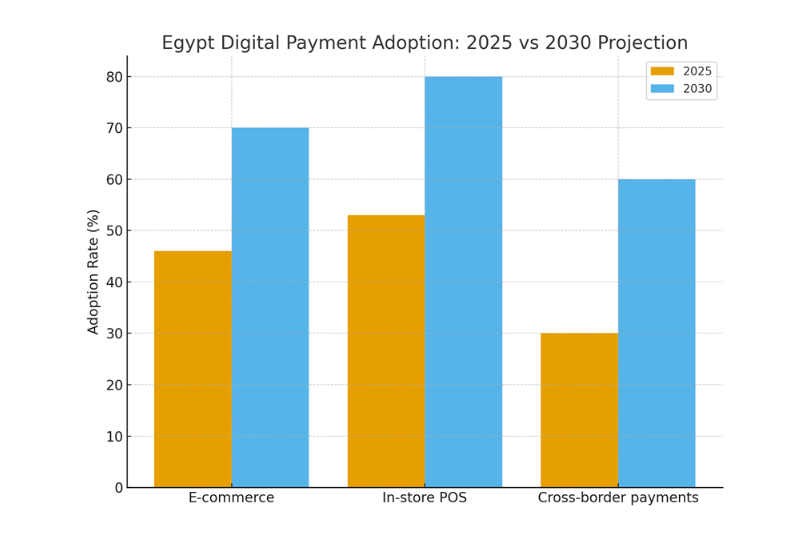
    The adoption rates vary significantly across different use cases:

    Payment Channel Egypt’s Adoption 2025 2030 Projection
    E-commerce ~46% 13–15% CAGR
    In-store POS ~53% ~75–85%
    Cross-border payments Growing >60%

    In Egypt, nearly 46% of internet users shop online weekly, while around 53% of SMEs have adopted digital payments. Cross-border flows remain central, with remittances exceeding $30 billion annually and steadily shifting toward digital channels.

    Emerging Payment Technologies

    Biometric Authentication

    Biometric payments are moving into the mainstream, with everything from fingerprints to facial and voice recognition tightening security. Early results suggest these tools can cut fraud by as much as 75% while making the checkout experience faster and easier.

    Artificial Intelligence and Machine Learning

    AI-powered payment systems are revolutionizing fraud detection and transaction processing. Advanced AI systems are achieving 30% reductions in fraud while improving transaction approval rates through intelligent routing and risk assessment

    Central Bank Digital Currencies (CBDCs)

    Central banks worldwide are advancing CBDC initiatives, with government-backed digital assets designed to improve financial inclusion and reduce cross-border transaction inefficiencies. These developments aim to provide faster cross-border payments and reduced reliance on traditional intermediaries

    Blockchain and Tokenization

    The tokenization market is experiencing explosive growth, projected to reach $4.13 billion in 2025 with a CAGR (compound annual growth rate) of 22.1%.

    Blockchain is gaining ground in B2B and commercial payments, where it’s being used to move money faster and with greater security.

    Regulatory Landscape and Compliance Challenges

    The payments industry faces significant regulatory changes in 2025, with major compliance deadlines reshaping operational requirements:

    Regulation Deadline Impact
    SEPA Instant Payments January 2025 Payment Service Providers must support instant payments
    Fedwire ISO 20022 Migration July 2025 New message format implementation
    PSD2, AML, KYC Directives Ongoing Enhanced authentication and data privacy
    Egypt Instant Payment Network (IPN) Regulations Egypt Instant Payment Network (IPN) Regulations Egypt Instant Payment Network (IPN) Regulations
    Bar chart of digital payment adoption in Egypt, 2025 against the 2030 projection: e-commerce about 46% rising to 70%, in-store POS about 53% rising to 80%, and cross-border payments about 30% rising to 60%

    Over 98% of financial institutions report rising compliance costs due to complex global regulations, creating pressure for infrastructure modernization. The regulatory timeline shifts highlight the challenges banks face in implementing complex technical changes within tight deadlines.

    Regional Trends and Cross-Border Payments

    Egypt’s Digital Surge

    In Egypt, mobile wallet transactions in Q2 2025 topped USD 19.63 billion, up from USD 11.41 billion in the same period the year before — a massive 72% year-over-year increase.

    Meanwhile, about 64% of Egyptians reported higher use of digital payments in 2024, and 35% had adopted wallets.

    The Rise of Embedded Finance

    Embedded finance is transforming how payments are integrated into business operations, with experts anticipating $6.5 trillion in payments processed through embedded channels by 2025. This trend represents a shift from standalone payment solutions to integrated financial services within business ecosystems.

    Future Outlook and Strategic Implications

    The payments industry in 2025 is characterized by rapid technological advancement, regulatory complexity, and evolving consumer expectations. Key strategic priorities for industry stakeholders include:

    1. Digital Wallet Integration: Essential for competitive positioning
    2. Security Investment: Biometric and AI-powered solutions
    3. Regulatory Compliance: Proactive preparation for changing requirements
    4. Consumer-Centric Design: Focus on convenience, rewards, and seamless experiences
    5. Partnership Strategy: Collaboration with technology leaders and fintech innovators

    Security Innovations and Fraud Prevention

    Payment fraud losses have surpassed $40 billion globally, making security innovations critical for industry sustainability. Key security developments include:

    • Biometric Authentication: Up to 75% fraud reduction capability
    • AI-Powered Fraud Detection: Real-time risk assessment and prevention
    • Tokenization: Enhanced data protection and privacy compliance
    • Advanced Encryption: Multi-layer security protocols

    In conclusion,

    The payment trends of 2025 reflect a fundamental transformation of the financial services landscape. Digital wallets, emerging technologies, and changing consumer behaviors are reshaping how transactions are conducted globally. Organizations that embrace these trends, invest in security innovations, and maintain regulatory compliance will be best positioned to thrive in this dynamic environment.

    As we move toward an increasingly digital future, the payments industry must balance innovation with security, convenience with compliance, and global reach with local requirements. The successful navigation of these trends will determine the leaders in tomorrow’s financial ecosystem.

    Sources

    • Google Trends data (digital wallet searches)
    • Visa consumer & industry reports (digital wallets, biometrics, authentication trends)
    • Discover Global Network research (payments) consumer biometrics, fraud prevention, real-time
    • Nexi Group mobile payment reports (Italy, Nordics, sustainability)
    • Worldpay forecasts (global real-time transactions, green payments)
    • J.P. Morgan payment insights (cross-border flows, Wire 365, $10T daily processing)
    • LexisNexis fraud prevention and embedded payments studies
    • FedNow and RTP Network (instant payments adoption, ISO 20022)
    • Central Bank of Egypt (IPN/Instapay regulations, adoption)
    • Mordor Intelligence (Egypt digital payments & e-commerce forecasts)
    • PwC / Egyptian consumer surveys (digital payment adoption rates)
    • Thunes & Arab News (Egypt remittances)
  • Fintech Trends 2026: Exclusive Future Insights

    The Digital Frontier: Navigating Fintech Trends in 2026

    Fintech trends in 2026 are set to redefine our relationship with money, moving beyond simple digitization to create a deeply integrated, intelligent, and personalized financial ecosystem. The landscape is evolving from a focus on convenience to one of contextual intelligence, where financial services are seamlessly woven into the fabric of our daily lives. As we approach this pivotal year, several key innovations are converging to shape a future where finance is more accessible, automated, and anticipatory than ever before.

    The Rise of Hyper-Personalization Through AI

    The most significant shift we will witness is the move from generic financial products to hyper-personalized financial companions. By 2026, artificial intelligence will have matured beyond chatbots and basic analytics. It will power proactive financial management systems that understand an individual’s unique cash flow, life goals, and risk tolerance in real-time.

    Imagine a digital wallet that doesn’t just hold your money but actively manages it. It could automatically allocate spare change into an investment portfolio tailored to your long-term objectives, suggest optimal times to make large purchases based on market conditions and your personal budget, and even renegotiate subscription fees on your behalf. This level of personalization will be driven by the sophisticated analysis of vast datasets, enabling AI to offer bespoke financial advice that was once the exclusive domain of high-net-worth wealth managers, now available to the average consumer.

    How Embedded Finance Will Become Invisible

    A major trend underpinning this personalization is the full maturation of embedded finance. By 2026, the very term “fintech” might begin to feel redundant because financial services will be so deeply embedded into non-financial platforms that they become virtually invisible. We are already seeing this with “buy now, pay later” options at online checkouts, but this is just the beginning.

    Soon, your favorite productivity software could offer integrated business banking and automated expense reporting. A car manufacturer’s app might seamlessly handle insurance, toll payments, and predictive maintenance financing. The key development will be the use of standardized Application Programming Interfaces (APIs) and data-sharing protocols, such as those seen in evolving payment infrastructures, which allow for secure and efficient transactions across different ecosystems. This creates a frictionless user experience where financial transactions are a natural byproduct of another activity, not a separate, cumbersome task.

    The Regulatory and Security Evolution

    This new, interconnected financial world will inevitably demand a parallel evolution in regulation and security. Fintech trends in 2026 will be heavily influenced by the global regulatory response to decentralized finance (DeFi) and the increasing sophistication of cyber threats.

    Navigating the Decentralized Landscape

    Regulators worldwide are grappling with how to oversee DeFi platforms that operate without a central authority. By 2026, we can expect the emergence of clearer regulatory frameworks that aim to protect consumers without stifling innovation. This might include standards for smart contract audits, know-your-customer (KYC) procedures adapted for decentralized identities, and new forms of deposit insurance for digital assets. This regulatory clarity will be crucial for bringing institutional investors and a broader user base into the DeFi space, moving it from the wild west to a more mature market.

    Furthermore, security will shift from a reactive to a predictive model. With AI-driven financial systems holding sensitive data, the stakes for cybersecurity are higher than ever. We will see a greater adoption of behavioral biometrics, which continuously authenticate users based on their unique patterns of typing, scrolling, and even holding their device. Quantum-resistant cryptography will also move from research labs to real-world implementation, preparing our financial infrastructure for the next generation of computing threats and ensuring the integrity of transactions in a hyper-connected world.

    The Infrastructure Powering the Future

    Behind the sleek user interfaces and intelligent apps lies a critical evolution in financial infrastructure. The back-end systems that process billions of transactions are undergoing a quiet revolution to support the speed and complexity of 2026’s fintech landscape.

    Real-time payment networks will become the global standard, enabling instant cross-border settlements that are as simple as sending a text message. This will be powered by upgraded core banking systems and interoperable platforms that can communicate flawlessly with each other. The focus will be on creating a robust, scalable, and resilient infrastructure that can handle the exponential growth in data and transaction volume, ensuring that the user experience remains smooth and reliable even during peak demand.

    In conclusion, the fintech landscape of 2026 will be characterized by a fundamental shift from standalone apps to an integrated, intelligent financial layer that exists across our digital lives. The winners in this new era will be those who can successfully merge hyper-personalization with ironclad security, all while navigating an evolving regulatory environment. The result will be a more democratic, efficient, and intuitive financial world for everyone.

  • RegTech in 2025

    RegTech in 2025

    RegTech: How It Works and Why It Matters

    Technology is changing finance faster than traditional regulation can keep up. RegTech (Regulatory Technology) fill this gap by using AI, and automation to improve compliance and oversight. Instead of simply being buzzwords, they have become the backbone of a smarter regulatory landscape.

    Global Growth of RegTech

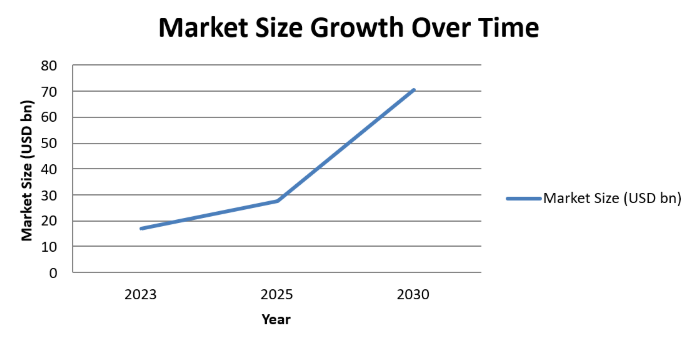
    The global RegTech market was valued at USD 12.4 billion in 2023 and is expected to reach USD 41 billion by 2030, growing at an annual rate of around 23%. Adoption has spread rapidly: over seventy percent of financial institutions in the European Union and the United States now rely on RegTech tools for anti-money laundering (AML) and know-your-customer (KYC) compliance. On the supervisory side, more than thirty-five regulators worldwide, including the Monetary Authority of Singapore, the European Central Bank, and the UK’s Financial Conduct Authority, use AI-driven monitoring platforms to keep markets in check.

    Year RegTech Market Size (USD bn) CAGR
    2023 17.02 –
    2025 ≈25-30 (est.) 23.1%
    2030 70.64 23.1%
    Line chart of RegTech market size in USD billions: about 17 in 2023, about 27 in 2025 and about 71 in 2030

    Egypt’s Regulatory Context

    Egypt is gradually weaving RegTech into its financial framework. The Central Bank of Egypt (CBE) issued the 2019 Banking Law and later its 2020 FinTech Strategy, which encourage electronic KYC (e-KYC) and digital payment adoption. The Financial Regulatory Authority (FRA) has also started using supervisory technologies to enhance market surveillance and anti-money laundering compliance monitoring. Egypt is aligning itself with the global standards set by the Financial Action Task Force (FATF), which requires robust AML and counter-terrorism financing controls. A clear example of RegTech in action came in 2021, when the CBE mandated the use of e-signatures and digital onboarding in banks, a move that reduced fraud and minimized manual errors in customer verification.

    How RegTech Works

    In practice, RegTech operates by collecting data through APIs that pull customer and transaction information from multiple systems. Artificial intelligence then evaluates this data, checking it against blacklists and regulatory requirements, and automatically flagging suspicious patterns. Instead of lengthy manual reviews, institutions can now generate machine-readable reports that are instantly transmitted to regulators. The process creates a continuous audit trail, strengthening both transparency and efficiency.

    International Regulations and Adoption

    Globally, regulators are formalizing the shift. In the European Union, the European Commission introduced the PSD2 (Payment Services Directive), which forces banks to adopt APIs and lays the groundwork for RegTech in open banking and anti-money laundering (AML) compliance. In the United States, the Securities and Exchange Commission (SEC), the body that regulates securities markets, and the Financial Crimes Enforcement Network (FinCEN), which enforces anti-money laundering laws, both require automated reporting for securities transactions and suspicious activities. In Singapore, the Monetary Authority of Singapore (MAS); the country’s central bank and integrated financial regulator; launched a SupTech platform in 2019 designed around AI-driven monitoring. Meanwhile, in the Gulf, the Central Bank of the United Arab Emirates and the Saudi Central Bank (SAMA) mandate electronic KYC for fintechs, aligning their regulatory ecosystems with international standards and strengthening digital financial security.

    Region Regulation Focus Area Impact
    EU PSD2 Open banking, APIs Boosted RegTech KYC/AML
    USA FinCEN & SEC AML, securities Automated suspicious activity reports
    Singapore MAS SupTech Market supervision AI-driven monitoring
    Egypt CBE Banking Law 2019 e-KYC, digital payments Supports fintech innovation

    Risks and Challenges

    For all it’s impact, RegTech is not flawless. It’s effectiveness relies heavily on the quality of input data, and poor practices can lead to blind spots. AI models raise transparency issues, as their inner workings are not always explainable, which risks embedding bias into regulatory decisions. There are also ethical concerns about automation reducing human roles in compliance and oversight. Building trust in Regtech requires cooperation between regulators, institutions, and technology providers.

    Future Outlook

    Looking forward, emerging technologies such as blockchain promise immutable audit trails, while regulators experiment with dynamic, machine-readable reporting frameworks that replace static PDF filings. In the near future, AI systems may not only detect risks but actively prevent them by triggering safeguards before issues escalate. The trajectory is clear: as finance continues its digital transformation, RegTech will not remain optional. They are set to become the essential pillars of a more agile and resilient financial system.

    Sources

    Grand View Research. Regulatory Technology Market Size, Share & Trends Analysis Report, 2024–2030. (USD 17.02 bn in 2023; USD 70.64 bn by 2030; CAGR 23.1%).

    Zion Market Research. Global RegTech Market Report 2023–2032. (USD 9.24 bn in 2023; USD 50.64 bn by 2032; CAGR 20.8%).

    MarketsandMarkets. RegTech Market by Component, Deployment Type, Organization Size, Application, and Region – Global Forecast to 2026. (USD 7.6 bn in 2021; USD 19.5 bn by 2026; CAGR 20.8%).

    Central Bank of Egypt (CBE). Law No. 194 of 2020 on the Central Bank and the Banking Sector.

    Central Bank of Egypt. FinTech & Innovation Strategy 2020.

    Financial Regulatory Authority (FRA), Egypt. Market Surveillance and AML Guidelines.

    Financial Action Task Force (FATF). International Standards on Combating Money Laundering and the Financing of Terrorism & Proliferation (FATF Recommendations).

    Deloitte. The RegTech Universe 2023. Explains AI-driven compliance, KYC/AML automation, and regulatory reporting.

    World Bank. RegTech for Regulators: Innovations for Better Compliance.

    European Commission. Directive (EU) 2015/2366 on Payment Services (PSD2).

    U.S. Securities and Exchange Commission (SEC). Automated Reporting and Market Oversight Guidelines.

    Financial Crimes Enforcement Network (FinCEN). AML Program and Suspicious Activity Reporting Rules.

    Monetary Authority of Singapore (MAS). SupTech Initiatives and AI in Supervision (2019).

    Central Bank of the UAE. Regulatory Framework for Stored Values and Electronic Payment Systems (2017, updated 2021).

    Saudi Central Bank (SAMA). Electronic Know Your Customer (e-KYC) Regulations for Financial Institutions (2020).

    Bank for International Settlements (BIS). SupTech and RegTech: Tools for Better Oversight (2021).

    Financial Stability Board (FSB). Artificial Intelligence and Machine Learning in Financial Services (2017).

    European Central Bank (ECB). SupTech Applications for Market Supervision.

    World Economic Forum. The Future of RegTech: Blockchain and Real-Time Compliance (2022).