Tag: RegTech & SupTech

  • The ROI of Compliance: How RegTech and SupTech Modernization Drives Enterprise Cost-Reduction

    The ROI of Compliance: How RegTech and SupTech Modernization Drives Enterprise Cost-Reduction

    1. Executive Summary

    Compliance costs in MEA emerging markets are rising faster than the balance sheets they protect. Central banks in Egypt, Rwanda, and Tanzania are expanding their demands for granular data on capital, liquidity, AML, and payment-system resilience. At the same time, instant payments and mobile money have multiplied transaction volumes.

    Institutions and supervisors have mostly absorbed this by adding people. Under that model, cost grows in line with regulatory scope. This analysis demonstrates that RegTech and SupTech modernization breaks that link. When compliance is built as data infrastructure rather than as a labour function, it becomes a measurable source of operational savings for both the regulated and the regulator.

    2. Demystifying the Ecosystem

    RegTech is the technology regulated entities use to meet their obligations: banks, payment service providers, microfinance institutions, and fintechs. It covers automated regulatory reporting, AML transaction monitoring, e-KYC, sanctions screening, and regulatory change management. It runs on the institution’s own data.

    SupTech is the technology central banks, regulators, and financial intelligence units use to collect, validate, and analyse supervisory data. It covers automated data collection, supervisory data warehouses, risk dashboards, and early-warning analytics. It runs on data aggregated across the whole supervised population.

    The two meet at the public-private interface, where most of the system’s compliance cost sits. In the legacy model, that interface is a document exchange: a template is published, filled manually, signed off, and re-checked by hand. In a modern model, it is a data contract. That contract is a shared data dictionary, machine-readable validation rules, and a secure API channel. The National Bank of Rwanda’s move from submitted templates to automated data pulls shows this model is achievable in an emerging-market setting.

    3. The Cost and Efficiency Vectors

    3.1 Automated, granular data ingestion and reporting

    In legacy reporting, most effort goes to extraction, spreadsheet transformation, and reconciliation. None of these steps adds analytical value.

    An illustrative model shows the scale. A mid-tier bank filing 60 recurring returns at 30 person-hours each spends about 21,600 hours a year on report production. That is more than ten full-time staff. A RegTech layer built on one canonical data model can automate 60–70% of that effort, releasing six to eight FTEs. When a new return is introduced, the bank adds a mapping, not a manual process.

    Granular, contract-level data also lets regulators derive new aggregates themselves. This cuts ad-hoc data requests, one of the most disruptive and least budgeted compliance costs.

    3.2 Fewer errors, fewer fines, fewer bottlenecks

    Manual reporting fails predictably: transposition errors, inconsistent classifications, stale rates, and reconciliation breaks closed under deadline pressure. RegTech reduces this exposure in three ways:

    • Validation at source: regulator rules run before submission, so breaks are fixed while they are cheap.
    • Data lineage: every figure traces to source records, which shortens audits and inspections.
    • Deterministic controls: screening and monitoring apply the same rules every time.

    AML shows the largest gap. Rules-based monitoring is widely reported to produce false-positive rates above 90%. Risk-scored triage redirects analyst time to genuine risk, a critical gain where qualified analysts are scarce.

    3.3 From reactive audit to predictive detection

    Traditional supervision looks backward, and findings often arrive months after the behaviour. With high-frequency data, institutions monitor liquidity, exposures, and AML typologies continuously, catching issues before they become breaches. Supervisors apply peer-group outlier detection and network analysis to target examinations by measured risk rather than by calendar. Early correction costs far less than remediation.

    4. The Interoperability Advantage

    RegTech and SupTech built separately save money on each side. Built to a shared architecture, they save money across the whole system. Without a common interface, every institution builds bespoke adapters to changing requirements, and the regulator absorbs inconsistent submissions.

    A unified data bridge rests on four principles:

    1. Shared data dictionary: one versioned model of definitions and validation rules, built on XBRL, SDMX, and ISO 20022. ISO 20022 alignment lets payment and reporting data share one semantic layer.
    2. Open, secure APIs: push and pull exchange replaces file uploads, secured with mutual TLS and OAuth. Validation feedback becomes immediate, cutting resubmission cycles from days to minutes.
    3. Microservices engines: ingestion, validation, analytics, and case management deploy independently. A new requirement means a new service and one mapping update, not a rebuilt pipeline.
    4. "Report once, use many": the central bank, FIU, and statistics function draw on one governed submission instead of separate requests.

    Institutions gain lower integration costs and faster adoption of new rules. Supervisors gain cleaner data at intake and analytical capacity that grows without matching headcount. The system gains credibility, which has direct value in correspondent banking and FATF evaluations.

    Strategic Implications

    Financial institutions and regulators must treat compliance modernization as infrastructure investment with a quantifiable return. That return comes from released labour, lower penalty exposure, and cheaper adoption of each new rule. It is maximized when RegTech and SupTech are designed against one data contract rather than procured separately.

    Entrant DPS operates at this interface, helping central banks across Egypt, Rwanda, Tanzania, and wider Africa design SupTech data architectures, and helping institutions build RegTech that connects to them cleanly. The objective is compliance infrastructure that costs less to run each year.


  • RegTech in 2025

    RegTech in 2025

    RegTech: How It Works and Why It Matters

    Technology is changing finance faster than traditional regulation can keep up. RegTech (Regulatory Technology) fill this gap by using AI, and automation to improve compliance and oversight. Instead of simply being buzzwords, they have become the backbone of a smarter regulatory landscape.

    Global Growth of RegTech

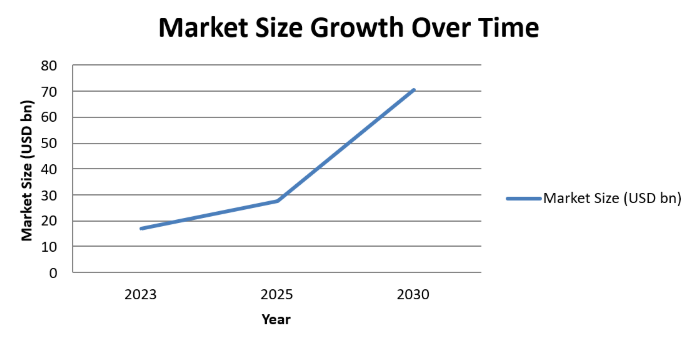
    The global RegTech market was valued at USD 12.4 billion in 2023 and is expected to reach USD 41 billion by 2030, growing at an annual rate of around 23%. Adoption has spread rapidly: over seventy percent of financial institutions in the European Union and the United States now rely on RegTech tools for anti-money laundering (AML) and know-your-customer (KYC) compliance. On the supervisory side, more than thirty-five regulators worldwide, including the Monetary Authority of Singapore, the European Central Bank, and the UK’s Financial Conduct Authority, use AI-driven monitoring platforms to keep markets in check.

    Year RegTech Market Size (USD bn) CAGR
    2023 17.02 –
    2025 ≈25-30 (est.) 23.1%
    2030 70.64 23.1%
    Line chart of RegTech market size in USD billions: about 17 in 2023, about 27 in 2025 and about 71 in 2030

    Egypt’s Regulatory Context

    Egypt is gradually weaving RegTech into its financial framework. The Central Bank of Egypt (CBE) issued the 2019 Banking Law and later its 2020 FinTech Strategy, which encourage electronic KYC (e-KYC) and digital payment adoption. The Financial Regulatory Authority (FRA) has also started using supervisory technologies to enhance market surveillance and anti-money laundering compliance monitoring. Egypt is aligning itself with the global standards set by the Financial Action Task Force (FATF), which requires robust AML and counter-terrorism financing controls. A clear example of RegTech in action came in 2021, when the CBE mandated the use of e-signatures and digital onboarding in banks, a move that reduced fraud and minimized manual errors in customer verification.

    How RegTech Works

    In practice, RegTech operates by collecting data through APIs that pull customer and transaction information from multiple systems. Artificial intelligence then evaluates this data, checking it against blacklists and regulatory requirements, and automatically flagging suspicious patterns. Instead of lengthy manual reviews, institutions can now generate machine-readable reports that are instantly transmitted to regulators. The process creates a continuous audit trail, strengthening both transparency and efficiency.

    International Regulations and Adoption

    Globally, regulators are formalizing the shift. In the European Union, the European Commission introduced the PSD2 (Payment Services Directive), which forces banks to adopt APIs and lays the groundwork for RegTech in open banking and anti-money laundering (AML) compliance. In the United States, the Securities and Exchange Commission (SEC), the body that regulates securities markets, and the Financial Crimes Enforcement Network (FinCEN), which enforces anti-money laundering laws, both require automated reporting for securities transactions and suspicious activities. In Singapore, the Monetary Authority of Singapore (MAS); the country’s central bank and integrated financial regulator; launched a SupTech platform in 2019 designed around AI-driven monitoring. Meanwhile, in the Gulf, the Central Bank of the United Arab Emirates and the Saudi Central Bank (SAMA) mandate electronic KYC for fintechs, aligning their regulatory ecosystems with international standards and strengthening digital financial security.

    Region Regulation Focus Area Impact
    EU PSD2 Open banking, APIs Boosted RegTech KYC/AML
    USA FinCEN & SEC AML, securities Automated suspicious activity reports
    Singapore MAS SupTech Market supervision AI-driven monitoring
    Egypt CBE Banking Law 2019 e-KYC, digital payments Supports fintech innovation

    Risks and Challenges

    For all it’s impact, RegTech is not flawless. It’s effectiveness relies heavily on the quality of input data, and poor practices can lead to blind spots. AI models raise transparency issues, as their inner workings are not always explainable, which risks embedding bias into regulatory decisions. There are also ethical concerns about automation reducing human roles in compliance and oversight. Building trust in Regtech requires cooperation between regulators, institutions, and technology providers.

    Future Outlook

    Looking forward, emerging technologies such as blockchain promise immutable audit trails, while regulators experiment with dynamic, machine-readable reporting frameworks that replace static PDF filings. In the near future, AI systems may not only detect risks but actively prevent them by triggering safeguards before issues escalate. The trajectory is clear: as finance continues its digital transformation, RegTech will not remain optional. They are set to become the essential pillars of a more agile and resilient financial system.

    Sources

    Grand View Research. Regulatory Technology Market Size, Share & Trends Analysis Report, 2024–2030. (USD 17.02 bn in 2023; USD 70.64 bn by 2030; CAGR 23.1%).

    Zion Market Research. Global RegTech Market Report 2023–2032. (USD 9.24 bn in 2023; USD 50.64 bn by 2032; CAGR 20.8%).

    MarketsandMarkets. RegTech Market by Component, Deployment Type, Organization Size, Application, and Region – Global Forecast to 2026. (USD 7.6 bn in 2021; USD 19.5 bn by 2026; CAGR 20.8%).

    Central Bank of Egypt (CBE). Law No. 194 of 2020 on the Central Bank and the Banking Sector.

    Central Bank of Egypt. FinTech & Innovation Strategy 2020.

    Financial Regulatory Authority (FRA), Egypt. Market Surveillance and AML Guidelines.

    Financial Action Task Force (FATF). International Standards on Combating Money Laundering and the Financing of Terrorism & Proliferation (FATF Recommendations).

    Deloitte. The RegTech Universe 2023. Explains AI-driven compliance, KYC/AML automation, and regulatory reporting.

    World Bank. RegTech for Regulators: Innovations for Better Compliance.

    European Commission. Directive (EU) 2015/2366 on Payment Services (PSD2).

    U.S. Securities and Exchange Commission (SEC). Automated Reporting and Market Oversight Guidelines.

    Financial Crimes Enforcement Network (FinCEN). AML Program and Suspicious Activity Reporting Rules.

    Monetary Authority of Singapore (MAS). SupTech Initiatives and AI in Supervision (2019).

    Central Bank of the UAE. Regulatory Framework for Stored Values and Electronic Payment Systems (2017, updated 2021).

    Saudi Central Bank (SAMA). Electronic Know Your Customer (e-KYC) Regulations for Financial Institutions (2020).

    Bank for International Settlements (BIS). SupTech and RegTech: Tools for Better Oversight (2021).

    Financial Stability Board (FSB). Artificial Intelligence and Machine Learning in Financial Services (2017).

    European Central Bank (ECB). SupTech Applications for Market Supervision.

    World Economic Forum. The Future of RegTech: Blockchain and Real-Time Compliance (2022).